How AI co-workers can help centralise work across departments
If your organisation runs on multiple tools and handovers, you have felt it. Work gets scattered, updates are delayed, and teams duplicate effort. Many companies lose close to twenty percent of productivity because processes are fragmented across departments. That loss is not just time, it is slower decisions, missed opportunities, and expensive rework.
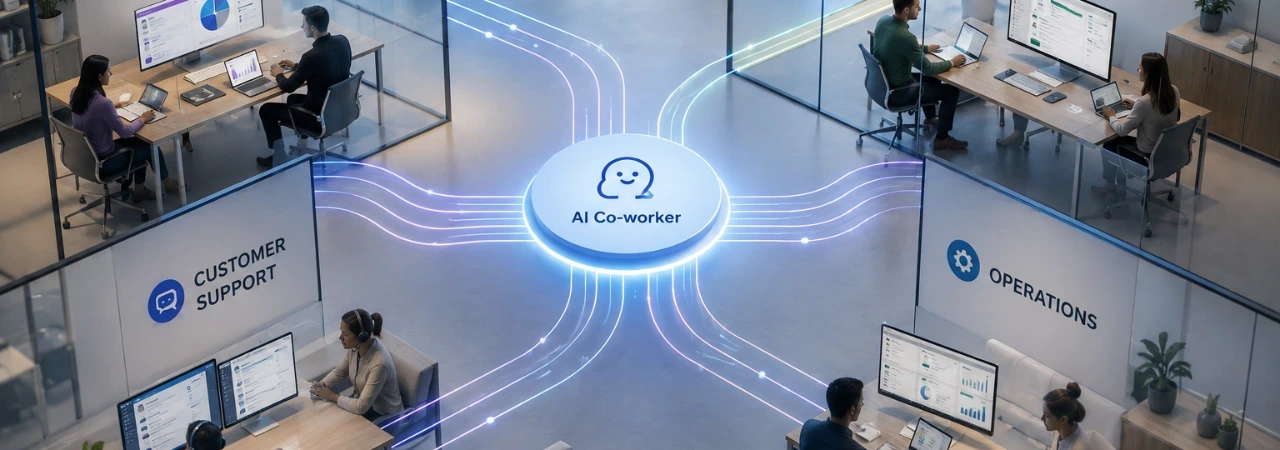
Imagine another way. Marketing, Sales, Finance, Human Resources, Customer Support and Operations move in step, sharing the same view of work and progress. No chasing status. No guessing who owns the next step. This is where artificial intelligence co-workers come in. These AI employees coordinate tasks across systems, centralise information flows, and keep teams aligned without adding more meetings or manual updates.
In this article, you will see how AI co-workers unify work across departments, what they do differently from traditional automation, where they deliver measurable value, and how to get started in a low-risk, high-impact way.
Want to integrate AI co-workers without disrupting existing teams? Read our guide to integrate AI into existing business processes to start confidently.
What AI co-workers are and why they matter
AI co-workers are specialised software agents that collaborate with human teams. Instead of being limited to a single tool or set of hard rules, they understand context, orchestrate work across connected tools, and keep everyone informed. Think of them as digital colleagues that manage the flow between departments while your people focus on decisions and relationships.
Beyond traditional automation
Most automation runs a script. Change the exception and the whole thing breaks. AI co-workers are different. They ingest signals from multiple sources, interpret intent, and take the next best action in line with your workflow automation. As processes evolve, they learn patterns and adapt without weeks of reconfiguration.
Recent public data shows adoption is rising, but still early. For instance, an official study indicates that the share of companies using artificial intelligence grew materially year on year, with clear room to scale across functions. See the latest studies on artificial intelligence in business for up-to-date figures on usage and trends.
Crucially, AI co-workers are built to handle nuance. They can distinguish a genuine blocker from a simple status change, escalate to the right person, and adjust timing based on priorities. That is the difference between “automated” and “intelligent”.
The centralisation advantage
When every department works inside its own systems, information goes missing in action. AI co-workers create a single point of coordination across your organisation. They link data and activity from existing tools into one operational view, so leaders and teams see the same truth at the same time.
This centralised work approach removes the classic information silos. Each function receives relevant, timely updates and can take action without waiting for a status meeting. Over time, you get fewer surprises, fewer escalations, and a culture of visible progress.
The result is intelligent workflow management that feels natural to your people. Instead of nudging, chasing, and reworking, teams move forward with clarity and pace.

How AI co-workers remove operational silos
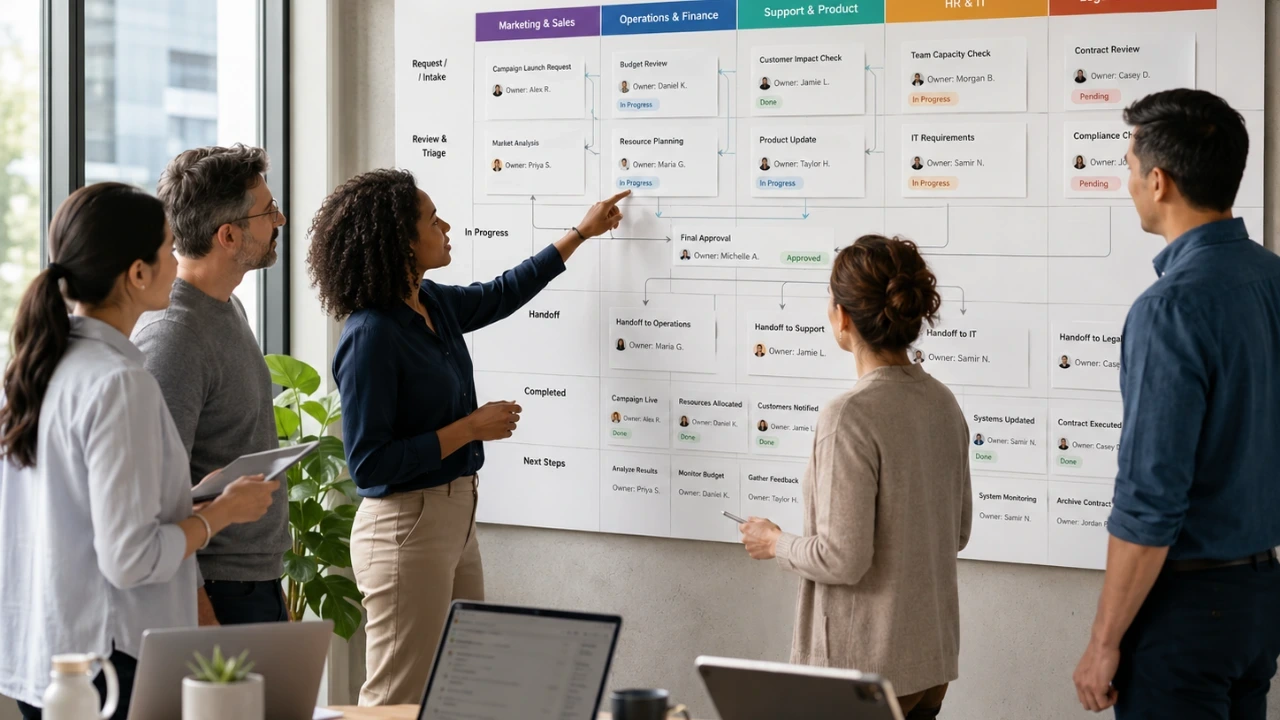
Silos form when work, tools, and incentives are misaligned. AI co-workers act as connective tissue. They combine inputs, keep dependencies visible, and route tasks to the right owner as context changes. No extra dashboards to learn. No new inbox to check. Work flows within the tools people already use.
Because these AI employees operate across departments, they spot cross-team dependencies automatically. Independent research on workflow management highlights the value of clarity, documented steps, and clear ownership in reducing delays. For a practical summary, review these best practices for workflow processes.
Core capabilities for cross-department alignment
- Real-time data synchronisation: information updates instantly across connected tools so everyone works with the same facts.
- Automated status updates: departments receive only the notifications that matter, reducing noise and missed alerts.
- Intelligent task routing: tasks are assigned based on ownership, capacity and sequencing, not static rules.
- Unified communication channels: project, case and deal discussions are centralised, easy to search, and audit-friendly.
- Predictive bottleneck alerts: the system anticipates risks and flags them early so teams can intervene before deadlines slip.
When these capabilities work together, operational visibility improves day by day. Leaders gain clearer forecasts, and front-line teams make faster, better decisions.
Practical applications across business functions
AI co-workers prove their value when they run end-to-end processes across Marketing, Sales, Finance, Operations, Human Resources, Customer Support and Product. The pattern is simple. Capture a trigger, interpret the context, update systems of record, and notify the right people. Repeat across adjacent workflows to build unified business operations.
Independent round-ups of real-world usage show that organisations see gains when they focus on well-scoped processes and measurable outcomes. See these practical returns of experience on artificial intelligence in business for a cross-industry view.
Use cases by department
- Marketing and Sales: campaign responses sync to the commercial pipeline, and qualified leads hand over instantly to account owners with clear next steps.
- Operations and Finance: low stock triggers budget checks and purchase approvals, preventing shortages and rush orders.
- Customer Support and Product: patterns in tickets feed prioritised product improvements with quantified impact and affected customer segments.
- Human Resources and Information Technology: new starter onboarding auto-provisions access, equipment and introductions, with progress visible to managers.
- Legal and Commercial: contract reviews align with deal stages, keeping approvals moving without holding back negotiations.
The common outcome is consistent. Fewer handoffs fall through the cracks, teams align on priorities, and business productivity improves in ways you can measure.
Getting started with AI co-workers in your company
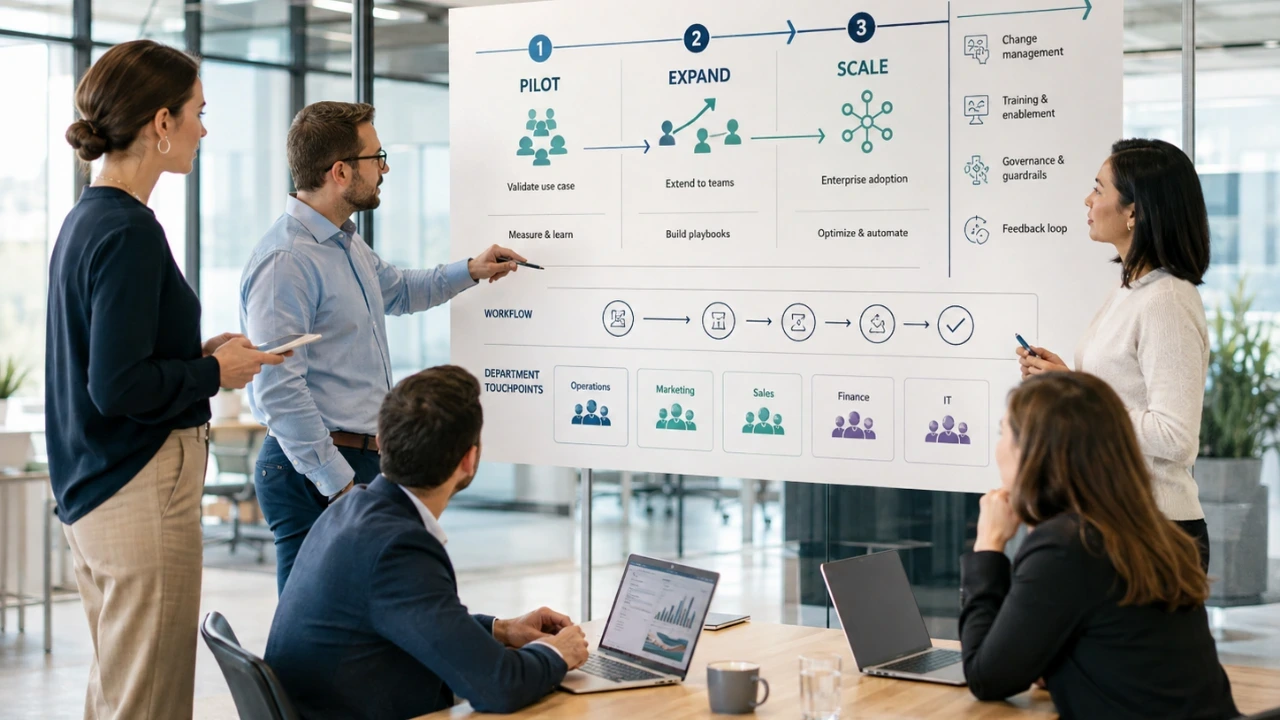
Adoption works best when you start with one high-value workflow, prove the improvement, then scale. The aim is not a big-bang transformation, it is steady, compounding wins that teams can feel in their day-to-day work.
Identify your coordination gaps
Begin with a fast process audit. Map each information flow and find where manual steps, duplicate entry, or unclear ownership cause delays. Look at repeated emails, recurring status meetings, and manual reporting. Interview a cross-section of people who do the work. Their everyday frustrations often point to the shortest path to value for workflow automation and better operational visibility.
Prioritise one process that is visible, frequent, and easy to measure. Define the current baseline, the target outcome, and the signals that prove success. That evidence makes executive sponsorship and team buy-in much easier.
Start small and scale with proof
Select a single cross-department workflow for your first deployment. Choose something that completes within days or weeks, not months, so the win is quick and obvious. Share clear before-and-after results. Celebrate time saved, fewer handoffs, faster cycle times, and better customer or employee outcomes. Those stories turn sceptics into advocates and create momentum.
As you expand, build a simple, repeatable playbook. Reuse what worked, adjust what did not, and scale to adjacent processes. For a structured approach to long-term change, see this AI transformation roadmap for companies that outlines stages, roles and decision points.
AI co-workers offer a practical route to centralised work and genuine cross-department collaboration. By removing silos and orchestrating intelligent workflow management across your connected tools, they give leaders and teams the same, trusted picture of what is happening now and what needs to happen next. The gains in business productivity are specific and defensible, from shorter cycle times to cleaner data and faster decisions.
Not every process is a good fit from day one, and adoption needs ownership and communication. Yet organisations that start with focused, measurable workflows build a durable advantage. Over time, they move from pockets of automation to unified business operations that keep pace with change.
FAQ
Share this article
Help your colleagues discover how AI co-workers can transform cross-department collaboration